


As the dust settles on the results of the 2024 Presidential Election, one of the most disappointing aspects of Donald Trump’s victory is the potential impact of his educational policies according to campaign promises heard for the months leading up to his victory. While there is much speculation about what changes he may actually have the power to make and what political points he spewed to satisfy his base of voters, let’s dive into what changes he’s discussing and what their possible outcomes may be for the educational equity of Black and Brown students as we know it.
Dismantling the Department of Education
One of the most egregious claims made by Donald Trump has been his promise to dismantle the Department of Education (DOE). In an effort to create more equitable opportunities in education, President Jimmy Carter established the DOE in 1979. Acknowledging the need to provide necessary resources to the most vulnerable students in the educational ecosystem, the DOE funds resource-limited campuses with two of the biggest programs like Title I, which supports low-income schools, and the Individuals with Disabilities Education Act (IDEA).
Most Americans believe that a shared value for the education of our children is collectively necessary for the forward progress of our country at a time when global competition is more pressing than ever. According to a 2023 poll, most Americans say they’d like to see more money spent on education in this country, not less. This is usually a mutual belief that Americans hold. However, we are now on a threshold where we have some people looking at the greater good of their individual families and communities versus the collective good of all children in the educational system. This is the underlying value ideology we have to bring to the forefront of these educational conversations. When Trumpian politics gain traction, who stands to win and who stands to lose?
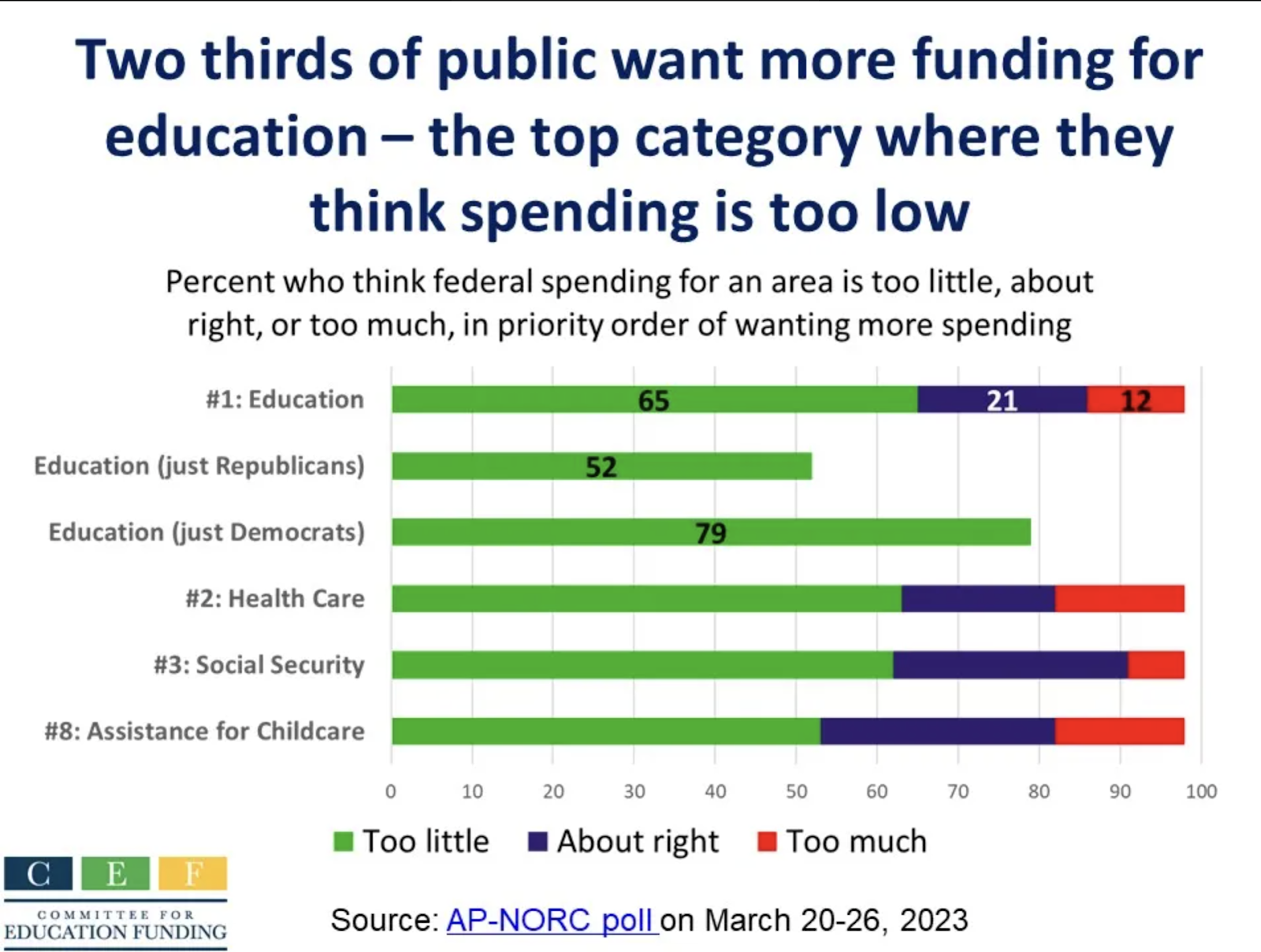
Despite the shared sentiment of the masses, Trump and his supporters have decided it best to advocate an agenda to provide less resources to the children that need it the most, as they view the Department of Education as a “woke” institution whose existence is simply an overreach of the federal government into a lane that should be left up to state and local governance. Although the federal funds may only account for about 10% of K-12 budgets, these numbers vary vastly based on the needs of the students in each school. For instance, in a state like Texas, federal funding may only comprise 5.57% of the budget in Prosper Independent School District, but 29.61% of the budget in Dallas Independent School District. In such cases, states would have to “find” more funding, something they are presently not willing to do, or the schools with the highest needs would face sweeping budgetary cuts.
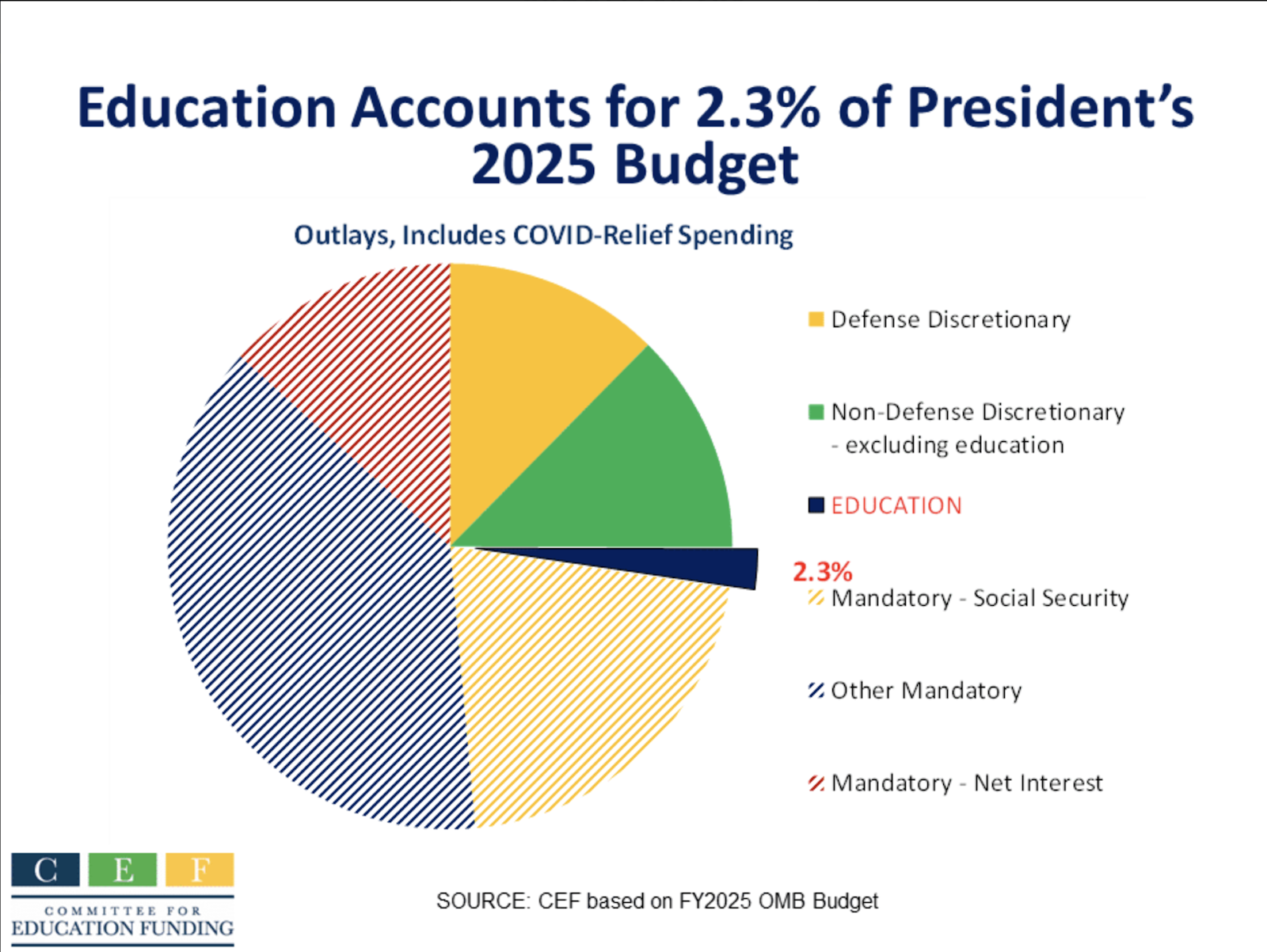
Not only is the idea of cutting funding to K-12 schools infuriating for obvious reasons of hypocrisy, but also when considering how 2.3% of the federal budget in 2025 will even be allocated for education compared to other priorities that will continuously dominate the President’s Budget. Despite a professed value of the children of our country getting an equal opportunity to get the best education, once again, we fail to put our money where our mouths are.
When the money comes up short, who are the students that stand to be the #1 recipient of such sweeping cuts? Black and Brown students, of course. When people accuse Trump and his conservative counterparts of being dangerous for students of color, these are the kinds of political moves they are referring to. Despite their claims of aiming to reduce the overreach of the federal government being the primary motivation for such policy and funding decisions in theory, the reality of children living in poverty in 2023 shows us exactly who stands to be impacted the most. More Black children live in poverty in the US than any other demographic at 29%, followed by American Indians at 27%, Hispanics at 22%, while Asian and White students account for the least at 10% respectively. And so it is that the funds that supplement their schools will be first on the chopping block, while the people advocating for such cuts continue to bask in the privilege of their children attending the best schools in the country. This is America.
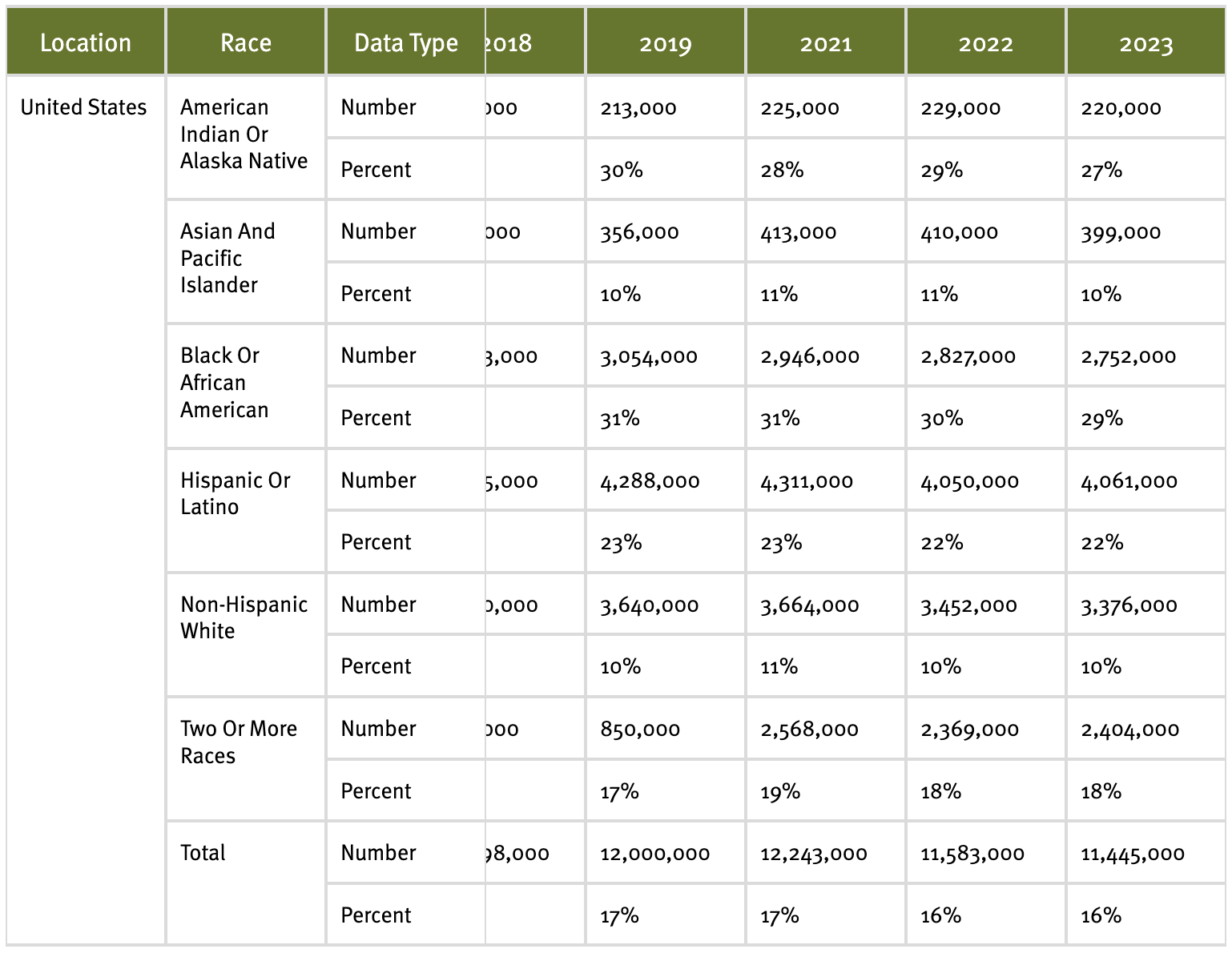
Source: The Annie E. Casey Foundation
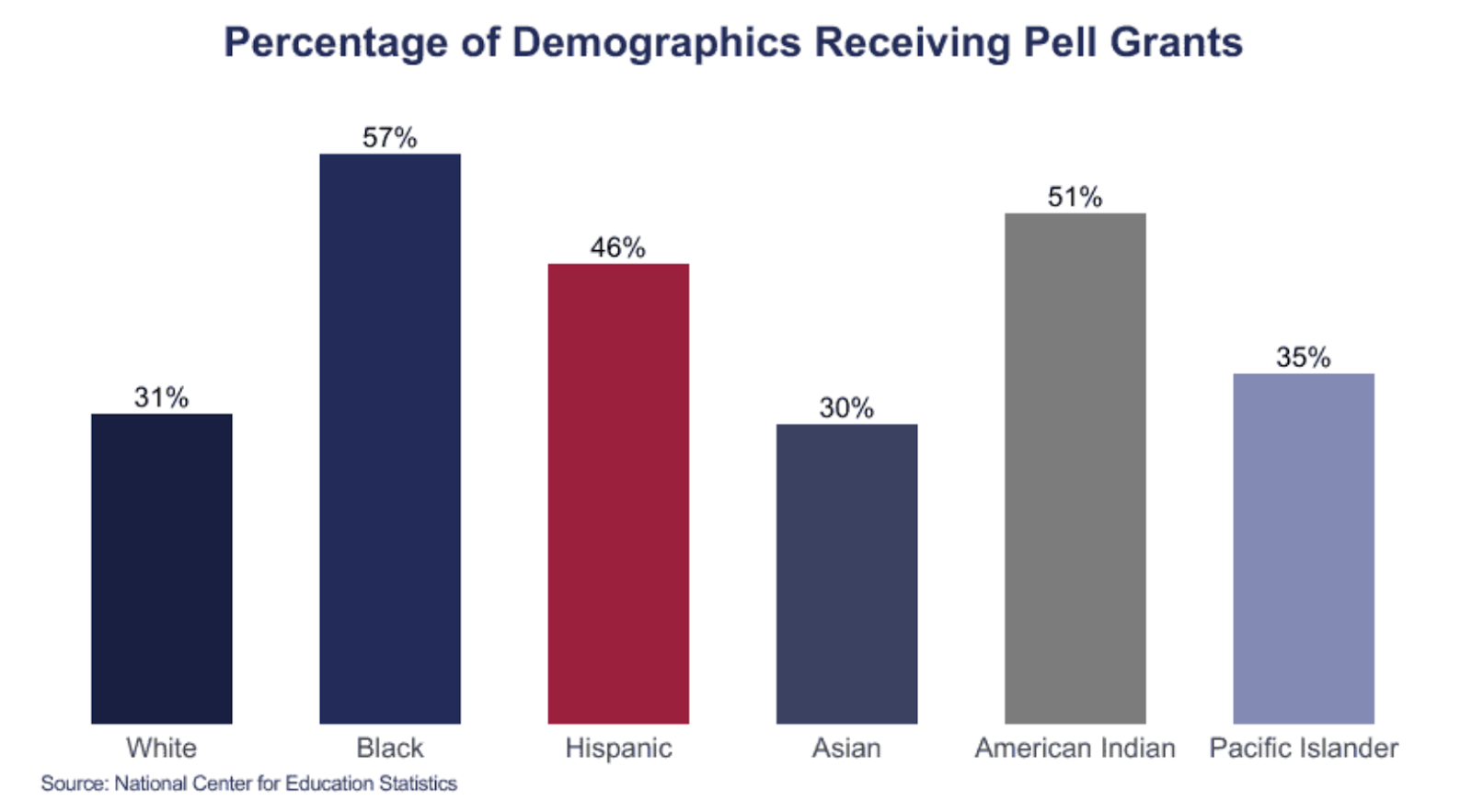
While Black and Brown students in K-12 schools stand to be impacted the most by cuts to programs in the Department of Education, under Trump policies, the impacts would also be felt in Higher Education. For instance, Pell Grants to college students being defunded would be catastrophic for many students already fighting to afford inflated tuitions at colleges and universities. Can you guess which student demographics stand to be impacted the most by such funding cuts? Black and Brown students coming from resource-limited communities. Are you seeing a trend emerge here? While Pell Grants accounted for about 18.5% of a recipient’s total higher education cost, that is no small amount for struggling students. A further analysis of the demographics of students receiving Pell Grants reveals that 57% of recipients are Black, 51% American Indian, 46% Hispanic, 31% White, and 30% Asian.
As it stands, Black students have the lowest 6-year college completion rate than any other racial demographic. According to the Lumina Foundation-Gallup 2023 State of Higher Education study, Black students reported racial discrimination, the high cost of higher education, and a multitude of external responsibilities as the cause for the lower completion rate. If it were not difficult enough for them to navigate institutions that were not created to support them adequately, the additional stress of financial shortcoming is oftentimes the straw that breaks the backs of Black and Brown students in higher education. Again, Trumpian policies only stand to exacerbate this issue on college campuses.
Other Federal Education Spending
While much conversation is being had about the dismantling of the DOE, there are educational programs funded through other departments that also impact schools in meaningful ways. It is with these disparities in mind that federal funding is allocated to help direct resources and access to the resource-limited schools that are uniquely positioned to support these students experiencing the limitations of poverty. This becomes very important when we see programs like Head Start that help families afford to jumpstart their children’s learning journey and position them for greater success in schools.
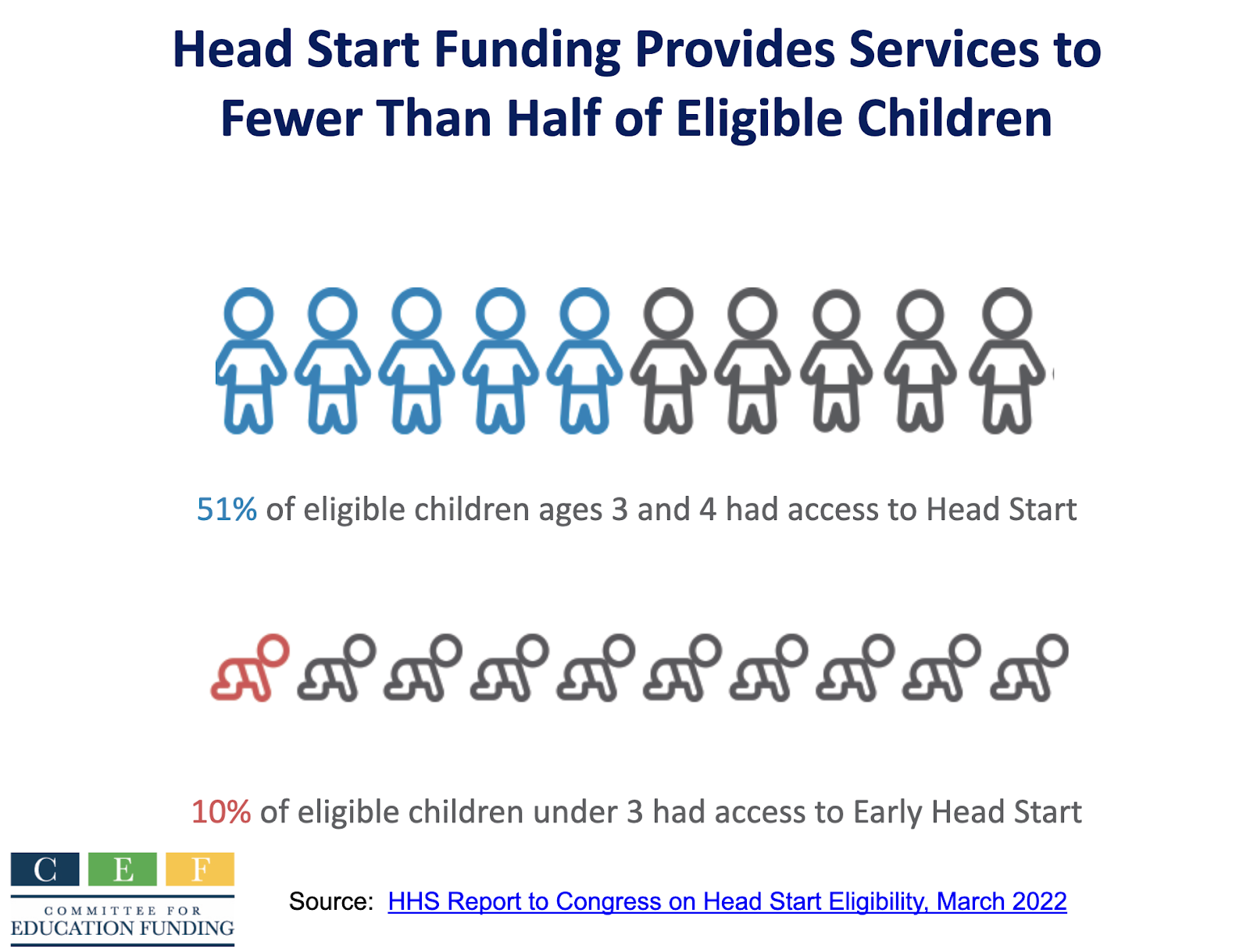
According to Capital and Main, during his first term in office, “Trump proposed a $29 billion cut over 10 years to Head Start, the federally funded program that provides child care to millions of low-income families — a 25% reduction. The proposal was rejected by Congress, which ended up passing bills that included a $550 million increase for Head Start.” With its current funding, the Head Start program is still only able to serve less than half of all the eligible children that need it at ages 3 and 4 and that number drops to 10% when considering children under the age of 3. Instead of proposing cuts to programs, it seems like investing more money into the infrastructure of early education services and facilities would be more in line with American’s professed belief that children are the future.
The good news, if there is any, is that the move to dry up federal funds from flowing to education isn’t as simple as Trump may have made it seem. Similar attempts by republicans to crush the DOE, in the past, were struck down by Congress. Ronald Reagan was a huge advocate in the fight against the DOE clinging righteously to the claim that welfare and education should be left to the states. But wouldn’t common sense tell us all that if the states were governing with justice and equality the federal government wouldn’t have needed to get involved with attempting to level the playing field in education in the first place? Most good people function with common sense.
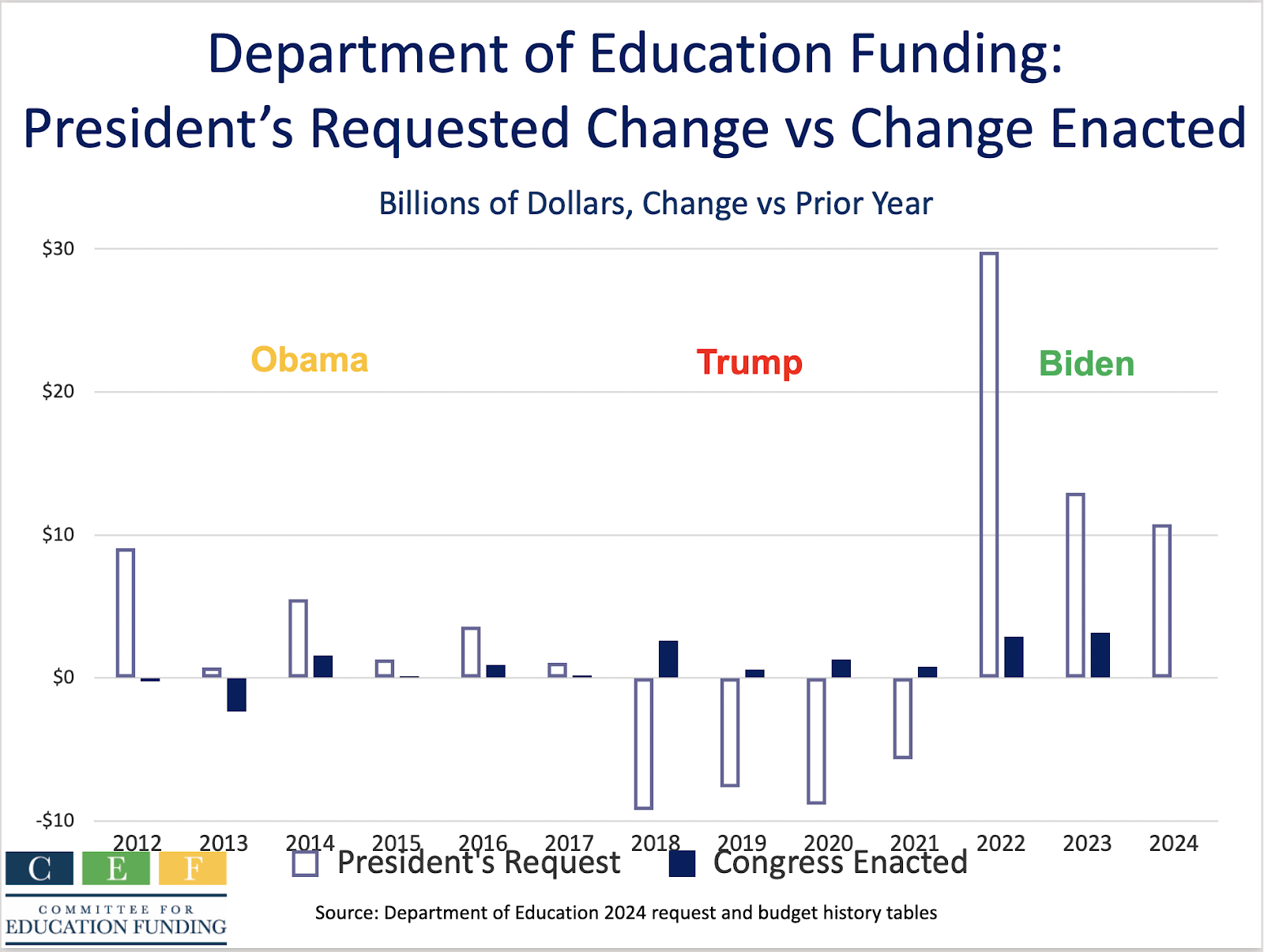
The truth here, and hopefully our saving grace, is that while Trump makes inflammatory statements for likes, votes, and air time, Congress would have to also agree with Trump, and just because republicans have the majority, doesn’t mean that all of them are willing to commit to such a massive overthrowing of a federal institution. In times where schools are underfunded and struggling to function on their current state and local budgets, some may find their constituents disgruntled by the idea of cutting important programs and departments in their local schools. If nothing us, history shows us that even when Trump’s presidential request was to decrease federal funding to schools (see table below) Congress continued to function with the common sense of a governing body. It’s not click-bait, jaw dropping rhetoric that governs Americans, it’s governing bodies. Data in the table below also shows that when a President, like Joe Biden, requested way more for DOE funding, congress approved more than was seen during the Trump presidency.
At the end of the day, dictator-centered rhetoric will always be a fool-proof way to keep videos circulating and people talking about Donald Trump, which certainly seems to be a primary motivation for him, but at the end of the day, it will be up to the people to advocate for the needs of their schools and communities with their local representatives. In a time where many people feel disheartened about the loss of Kamala Harris, what she symbolized to her supporters, and what her defeat confirms about the truths of who America is, the fight for our kids and schools must continue because we don’t have the option to surrender our children’s futures to the ideas of those who stand to lose the least. In the face of ideas and policies that stand to hurt students of color, and Black ones most acutely, we have to muster up the hope and spirit to respond with a resounding, “Hell NO!” and keep fighting another day.
This article is brought to you in partnership with the Chan Zuckerberg Initiative.

