


In an effort to encourage work-life balance and increase the morale of their employees, many companies now offer the benefit of shortened work weeks. Many of these companies also believe that having the option of a 4-day work week actually increases the productivity of employees, as they tend to spend more time focused on reaching key outcomes in the days they do come to work. But is this an approach that can be effective in K-12 public schools as well? Prior to the massive school closures caused by the COVID 19 pandemic, many people could not even imagine 4-day school weeks (4dsw) as a viable option, but now, the tide may be turning.
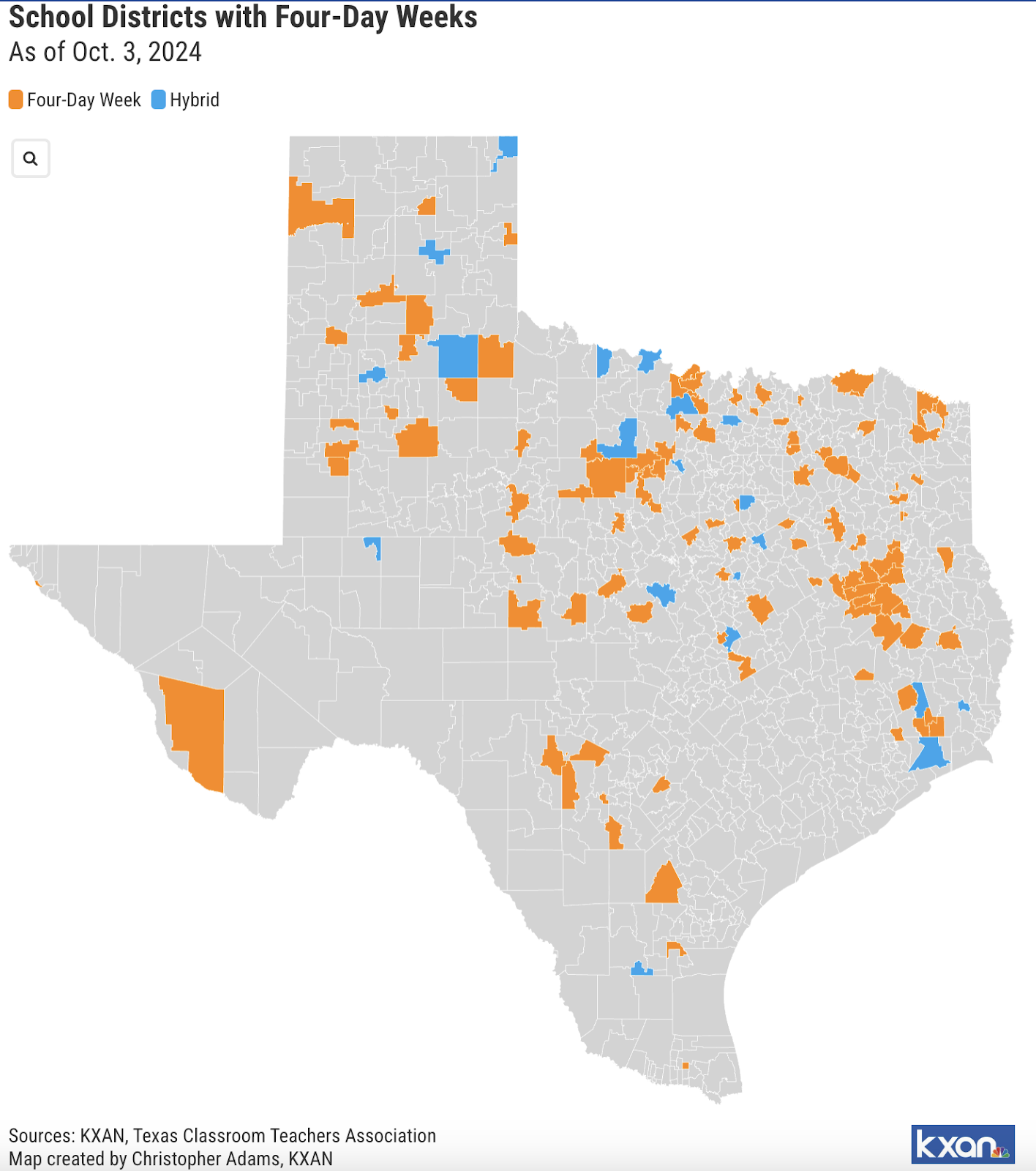
Although 4dsw were initially considered by rural districts looking to solve unique challenges with teacher recruitment and transportation issues, by 2023 the trend was growing like wild fire. According to the Associated Press, of the 13,000 school districts across the country, 900 were functioning with a truncated schedule, up from 662 in 2019. In the state of Texas, 86 school districts are running a 4dsw to the tune of 103,000 students, with 15 other districts offering a hybrid schedule.
Public Perception
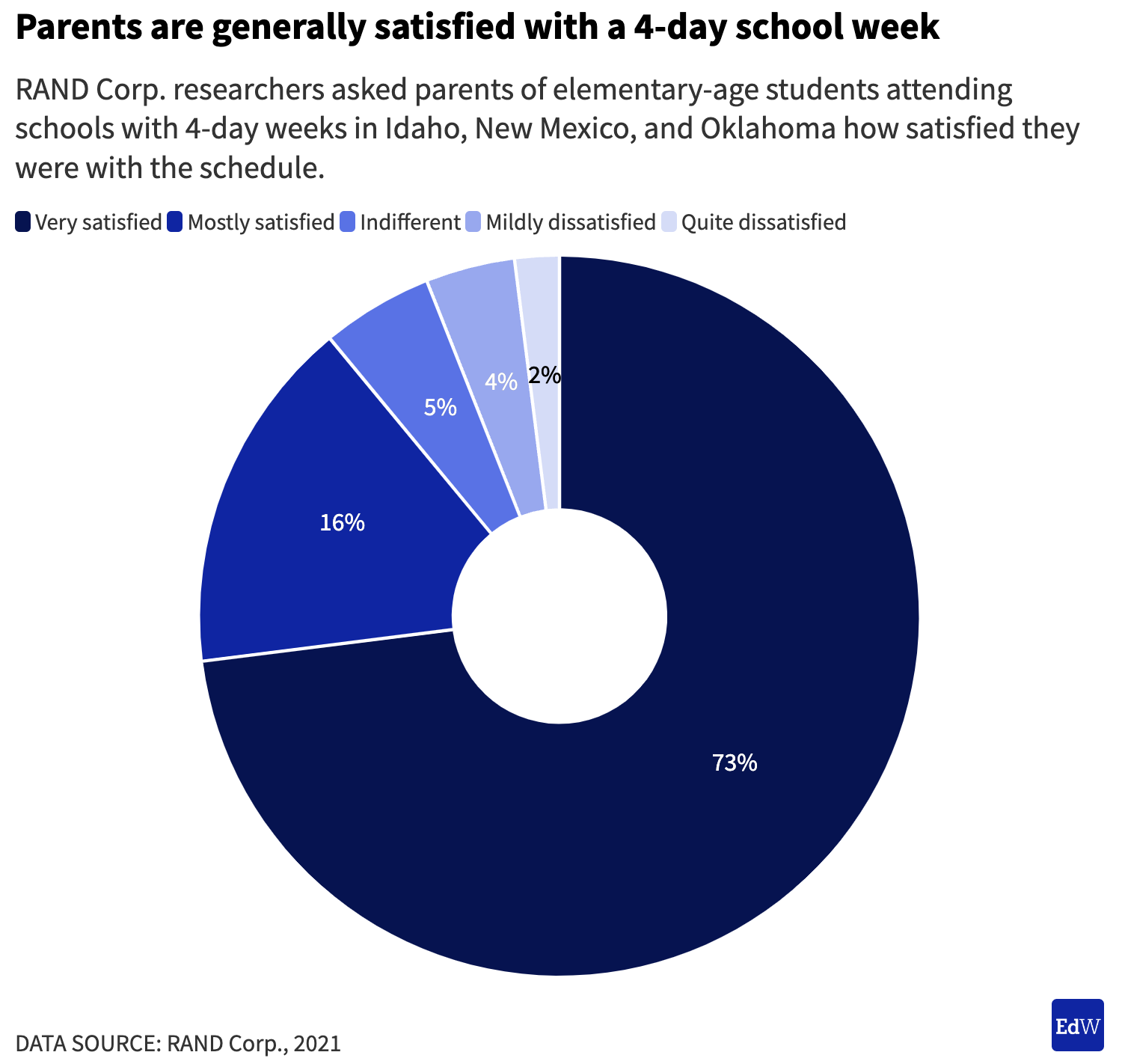
While many opponents of 4dsw believe childcare concerns would cause parents to oppose four-day school weeks, Rand researchers found that 73% of parents of elementary-aged students in schools that were running 4-day weeks reported being very satisfied with the schedule.
Having a week day out of school allowed many parents to schedule things like doctors appointments, out of town travel, and other priorities in such a way that did not require their children to miss out on key instructional time.
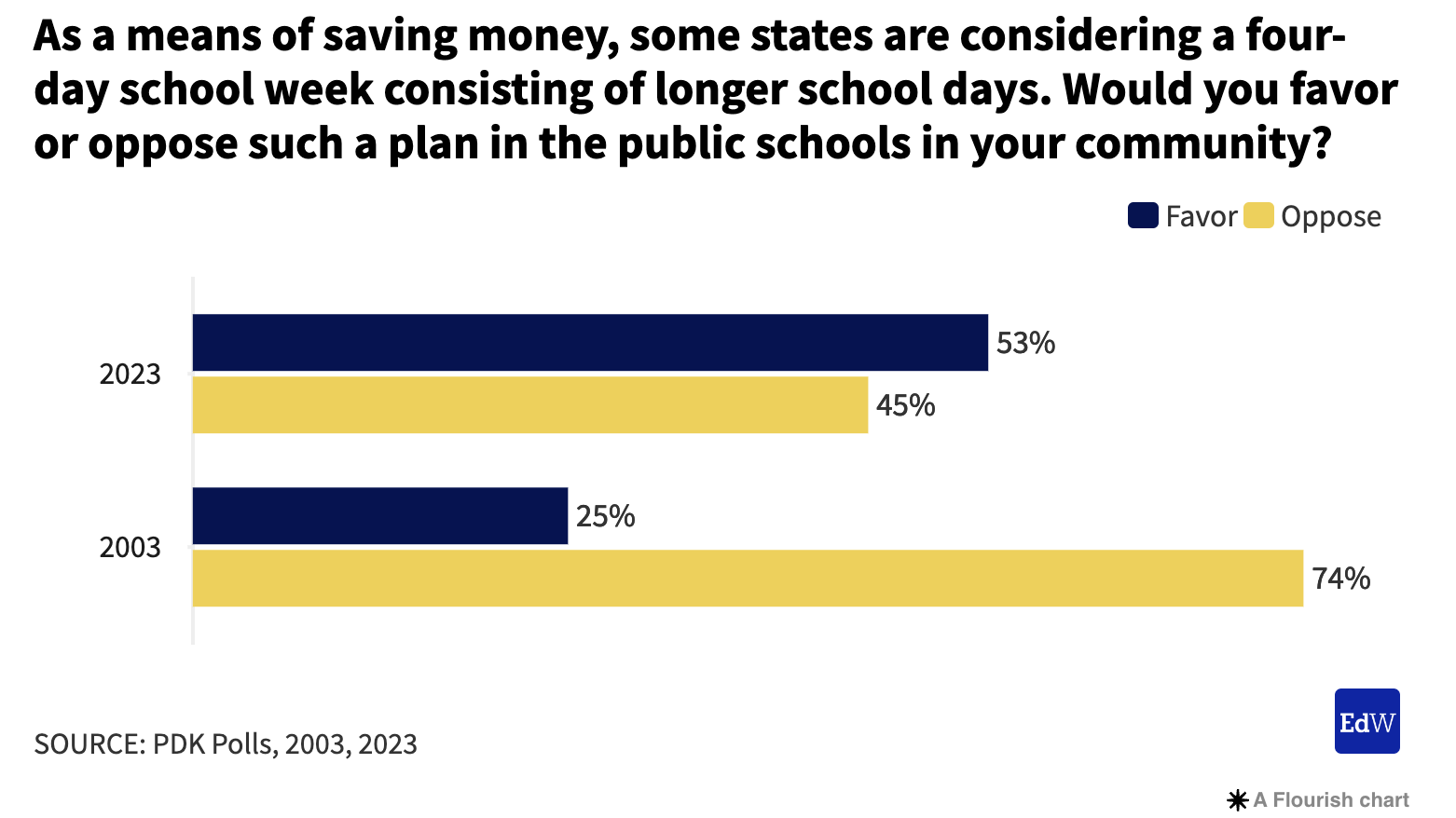
That same study also found that community members at large were more favorable of the 4dsw than they were in 2003. This is valuable information, as the community’s willingness to provide supports and options for families is key to the success of students.
Student Achievement
Opponents of the 4dsw often see the one less day of school as a loss of instructional time, thereby meaning learning loss for students. The problem with this critique is that it fails to consider how districts measure instructional time. For instance, when studying 4dsw in Oklahoma where the minimum instructional time per school year for students is 64,800 minutes, or Oregon where the minimum is 59,500 minutes, may not be a fair comparison to Texas, where the minimum is 75,600 minutes. When states switch from mandatory days to mandatory hours/minutes, it allows for flexibility of scheduling with each independent school district, thus allowing them to ensure each student gets the same amount of instruction if they are in a 5dsw or 4dsw district.
Farmersville ISD, is a district currently in their 5th year of implementing the 4dsw. Structurally, their schools are off on Mondays, and one Monday a month teachers have required PD sessions. The other 3 Mondays of the month are unstructured for teachers. According to assistant superintendent Micah Taylor, “We’re in our fifth year. Teachers love it. The community loves it. We’ve had one community member in four years come to a board meeting and express concerns.” Still more importantly, Taylor expresses that they haven’t experienced any decline due to the students being off on Mondays.
Learning Outside of the Box
With ready access to the internet and the growing need for experiential learning opportunities it is clear many parents are interested in exploring all the possibilities that exist for their students learning outside of the 4 walls of the classroom. 4dsw are just one path towards innovation for public schools that are poised to compete with charter schools, private schools, hybrid schools, online schools, and homeschool options.
While some may see one day out of school as a brainless break for students, there are great possibilities for students to engage in project-based and community-based learning experiences that extend the learning from the school week into the real-world. According to The Center on Reinventing Public Education some districts leverage the 5th day of the school week to engage their community assets by having students attend community college classes or apprenticeship opportunities with local businesses. Dispelling the notion that learning can only happen in a classroom and getting real about the fact that learning is happening in communities all the time is an idea that is well overdue.
In addition to leveraging the community assets, web-based tools and printed packets that allow for remediation and extensions of learning are valuable ways for students to engage on the 5th day of the school week. Most school schedules have embedded such intervention times into their regular class time, but allowing students an extra day to build on needed skills could be a game changer. This is especially true when the lessons are curated to include home and community aspects into the activities in a way that allows students to see the relevance of the content that they are learning in class and how it is present in and around their own homes, communities, and lived experiences.
Combatting Teacher Burnout
Although many people may look at the stats on student achievement to deduct if 4-day workweeks are beneficial in schools, one data point that may not be considered is the amount of out-of-contract time teachers invest to adequately prep and plan lesson plans and other associated responsibilities on a weekly basis. Teachers being overworked and underpaid is a socially accepted norm for many people, but just because something is socially acceptable doesn’t mean it’s equitable. So while a 3-day weekend with occasional days being used for professional development may seem like a luxury convenience to someone by a different industry standard, many educators know that the additional day may just, in fact, be an opportunity to give teachers back their 2-day work-free weekend after all.
Grading student assignments and providing quality feedback, attending extra curricular activities, contacting/conferencing with parents, planning and preparing weekly lessons that are differentiated, completing administrative tasks, serving on campus/district committees, etc. are all duties left for teachers to complete on top of their primary duty of instructional time with students. The 4dsw gives teachers adequate time during the contracted hours to actually do their jobs effectively.
In a time where districts cite recruiting and retaining teachers as a top reason for switching to a 4dsw, some people argue that what’s best for students should, in fact, be the top decision-making reason for the switch. But those that understand the research know that a highly effective teacher in the classroom is the most important asset for every student. When teachers are burnt out and not allowed the time they need to level up the learning opportunities for their students, they are less effective.
Although every districts’ needs and priorities may vary, it is clear by the growing numbers that more and more districts are considering the innovation offered by the 4dsw and navigating its challenges in the 21st century, as opposed to clinging to the status quo. Perhaps in the future we will see all the possibilities that unfold, as more school districts lean into making learning opportunities global and inclusive of the communities that surround them. The learning opportunities abound.

