


Overview:
While Harvard University's announcement of free tuition for students whose families earn under $200,000 a year may seem like a step towards making the elite college more accessible to low-income students, experts say that the policy fails to address systemic obstacles that keep Black students from attending the institution. The obstacles include deeply segregated, chronically underfunded public schools, racial bias, and economic stumbling blocks, such as expensive college admissions preparatory classes and pricey extracurricular activities. Harvard's tuition policy won't close the wealth gap, and the university needs to confront the structural inequities in the education system to ensure fair access to education for Black students.
Last month, when Harvard University announced students whose families earn under $200,000 a year would get free tuition, it looked as if one of the nation’s elite colleges had opened its doors to college-bound high school seniors from low-income households, a disproportionate number of whom are Black. However, in reality, experts say that Harvard’s doors are still largely closed to those students.
Dr. Ivory Toldson, a Howard University professor and editor-in-chief of The Journal of Negro Education, says even with free tuition, Black students still struggle to overcome a range of systemic obstacles that keep them out of Harvard and many other elite colleges.
Those obstacles include deeply segregated, chronically underfunded public schools that don’t adequately prepare students for a rigorous postsecondary education and racial bias that steers Black kids away from college-prep high school courses. There are economic stumbling blocks, too — including expensive college admissions preparatory classes and pricey extracurricular activities that top colleges all but demand.
“While Harvard’s tuition adjustment appears progressive, it fails Black students in critical ways,” he says.
Black Students and the Ivy Pipeline
To be clear, Harvard’s new free-tuition policy will help some Black students enroll in what’s arguably the most exclusive institution of higher education in the country. Annual tuition alone at Harvard is around $57,000, before factoring in books, student fees, and room and board.
According to recent data, the percentage of Black students in Harvard’s Class of 2028 is 14%, down from 18% last year, partly due to the Supreme Court overturning race-based policies in college admission. But that percentage doesn’t differentiate between students descended from American slavery versus Black immigrants from other countries in the African diaspora — students who may not have grown up in the U.S. or attended public school.
To Toldson, that’s a critical difference in understanding the barriers that keep African American high school seniors out of Harvard and other Ivy League schools. Most Black students granted admission to Harvard, he said, “already met previous economic thresholds, meaning systemic K-12 barriers, not cost, restrict access” to the Cambridge campus.
RELATED: Reading the Room: Why Black Kids Need More Than the Norm
Nevertheless, across the country, Black American students are enrolled in public K-12 schools that remain deeply segregated and highly underfunded. In fact, according to a 2020 analysis, more than 40% of the nation’s Black students attend schools where at least 90% of their classmates are students of color.
Experts say Harvard’s decline in Black admissions reflects broader, longstanding issues in how the nation’s public education system prepares Black students for elite institutions.
According to The Education Trust, predominantly Black school districts have $2,200 less to spend per student than majority-white districts. That often means less access to advanced coursework or updated books or other materials, fewer experienced teachers, and fewer opportunities for activities like varsity sports, ballet, youth orchestras, or debate teams — extracurriculars that Ivy League schools expect of their applicants.
Layered on top of academic and funding gaps is a shortage of college counseling. In many majority-Black schools, student-to-counselor ratios exceed 400:1 — far above the American School Counselor Association’s recommended 250:1. With so few counselors and so many students, Black students often receive little to no personalized college guidance.
Even better-funded, integrated K-12 schools aren’t an advantage. Data shows that Black students aren’t often guided into advanced-placement classes or honors-level courses that elevate a student’s college application.
Free Tuition Won’t Close the Wealth Gap
Even for the small percentage of Black students who meet Harvard’s steep academic requirements, another obstacle looms: wealth — or more accurately, the lack of it.
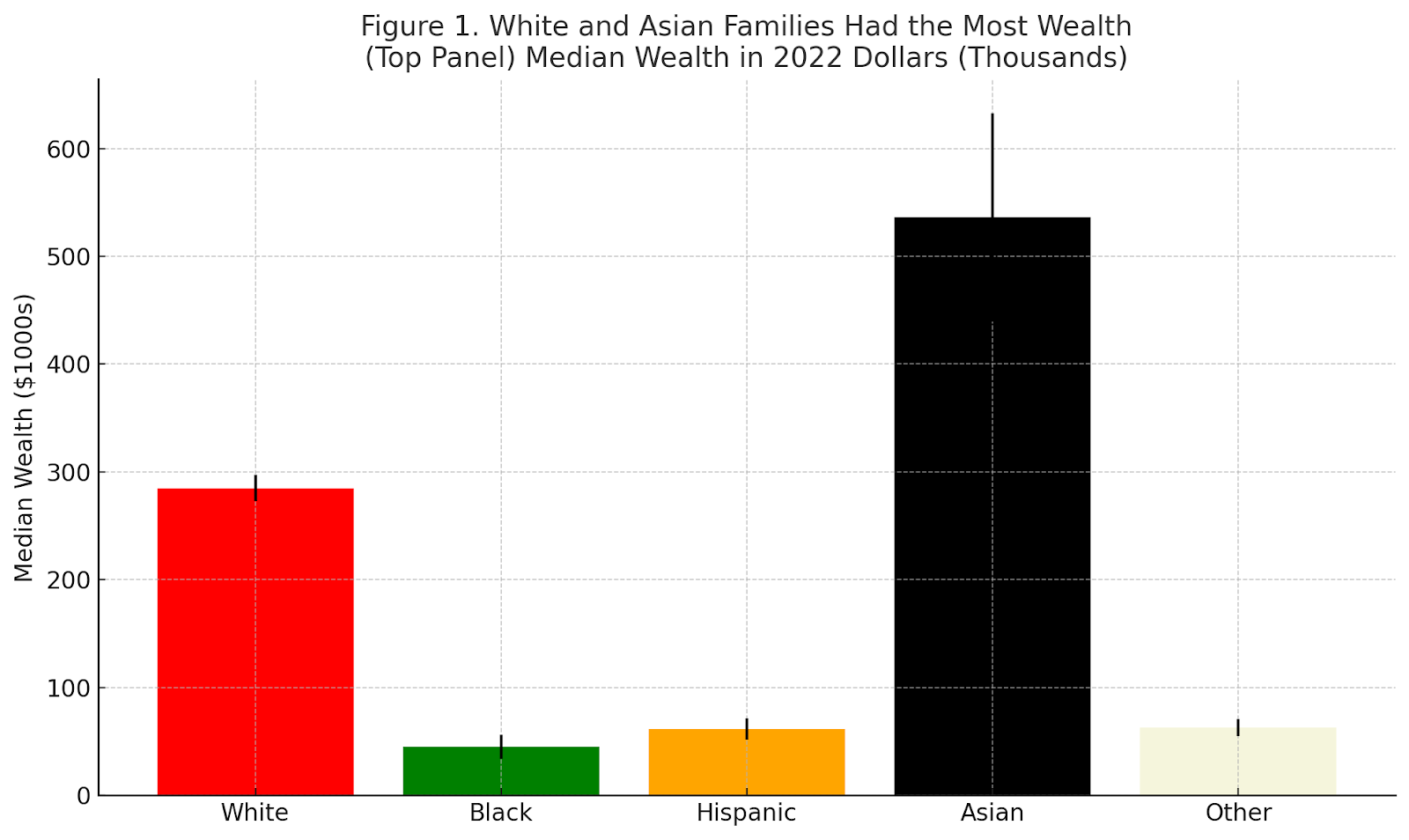
Paying full tuition for students whose families earn less than $200,000 is a positive step, but income doesn’t tell the whole story. According to a 2023 report from the Federal Reserve Board of Governors, white families hold 6.2 times more wealth ($285,000) than Black families ($44,900) on average — leaving Black families less able to afford college prep resources, admissions test preparation courses, and private tutors.
RELATED: The Power of Challenging the Black ‘Achievement Gap’
Even if a Black middle-class student makes it to the Cambridge campus, parents still have to find a way to pay for hidden expenses: housing, a cafeteria meal plan, student or lab fees, weekly laundry fees, and textbooks that can cost as much as $200 for a single course.
Given those costs, Toldson says, it’s no wonder so many Harvard students come from families who hold generational wealth, a rarity for Black students.
“A Black family earning $200K without generational assets, due to decades of discriminatory policies, cannot compete with white families at $175K backed by grandparents’ wealth accumulated during legal segregation,” he explains. “Nearly half of families rely on extended kin for tuition, but centuries of wealth stripping leave Black families disproportionately excluded from such networks.”
Word In Black reached out to Harvard University to comment on how the university plans to ensure this policy reaches underrepresented Black students. The university did not respond.
Confronting the System
While Harvard’s tuition policy makes elite education look more attainable on paper, Black students need more than financial aid. They also need fair access to education. That means investing in public K-12 education, challenging tracking systems that unfairly limit Black students, and addressing generational wealth gaps.
“Until elite institutions confront these structural inequities, such surface-level reforms will perpetuate exclusion,” Toldson says.
The post Why Free Tuition Might Not Help Black Kids Go to Harvard appeared first on Word In Black.
The post {{post title}}, https://wordinblack.com/2025/04/why-free-tuition-might-not-help-black-kids-go-to-harvard/ appeared first on Word in Black.